

Bryophytes
Can Moss Grow In The Sun? | Top 4 Sun-Tolerant Mosses
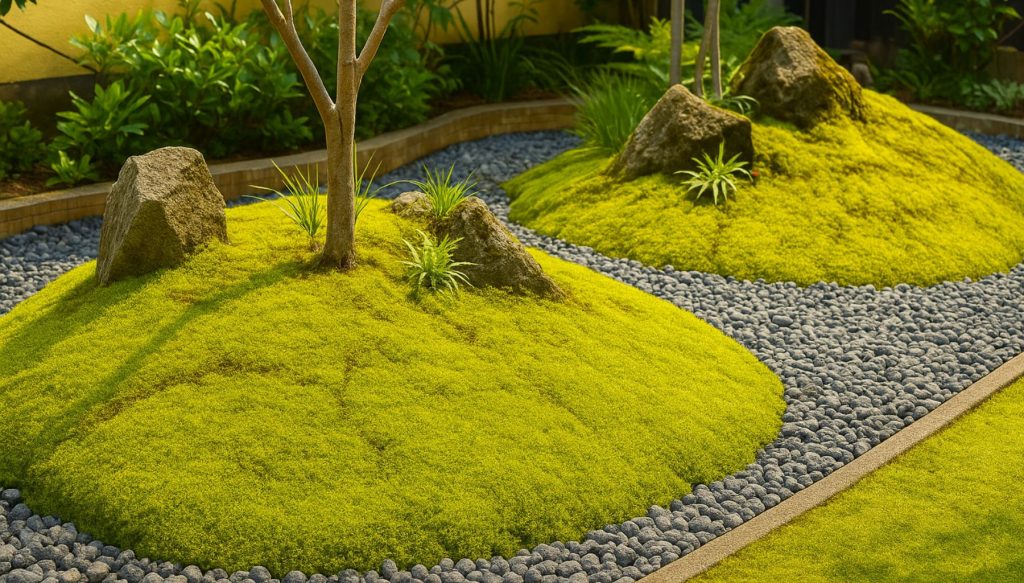
It is often said that moss can only grow in the shade. This is a myth, because plenty of mosses will hold a sunny site as long as they get the moisture they need. Below is a guide to sun-loving mosses. Mosses are found all over the planet, from the driest and hottest parts of the Sahara to the shadiest corners of the humid Amazon rainforest. So yes, moss can grow in the sun.
One of my favorite sun-tolerant mosses is Syntrichia caninervis. This unique desert plant has developed a beautiful trick to tap into scarce water supplies in the desert. It has developed an awn (a thirst-quenching structure) with hairlike structures that project from the end of its leaves to capture precious water from dew.
The awns of this moss have grooves about a hundred nanometers deep and two hundred nanometers wide, which makes them perfect for capturing moisture from the air.
Already know you want to plant a sunny site? Four species handle sun and they are not interchangeable: two want sharp drainage, one needs ground that stays wet, and one leans to shade. Match the site before the look.
See the sun moss collection, with a project cost estimator and volume pricing.
The Four Sun-Tolerant Mosses Used For Landscaping
Here are four mosses that grow well in partial and full sun. One thing to keep straight before you choose: sun tolerance and drought tolerance are not the same thing. Two of these want sun and sharp drainage. One takes sun but needs ground that stays wet, and putting it on a dry bank will fail. The last leans to shade and is here because people keep asking about it.
- Full Sun Moss (Racomitrium): Very drought-tolerant and a great groundcover for full sun. Grown on a geotextile backing, so it lays flat and cuts to shape. Needs excellent drainage.
- Sun Moss (Bryum): A well-known sun moss for dry, exposed sites, especially crevices and stonework, though a bit harder to handle.
- Star Moss: The one for sunny ground that stays wet. Bog gardens, rain gardens and pooling areas.
- Cushion Moss (Pincushion): Popular in landscaping for its sculptural clumps. It takes part shade and will handle some sun, but deep shade suits it best and full sun should be avoided.
Below you can find short descriptions and images of the four, including links on where to buy them. If you’d rather compare them side by side with pricing, start on the sun moss page.
1. Full Sun Moss (Racomitrium)
Full Sun Moss (Racomitrium) is the best option for exposed, well-drained ground because of its sun and drought tolerance. It thrives in full sun through moderate shade and forms a low, tight mat with little star shapes.

We grow this one on geotextile fabric, which means it arrives as an even mat that can be cut to any shape or dimension rather than as variable clumps. It thrives on sand, gravel and exposed rock, so it suits green roofs, gravel paths, stone caps and Japanese-inspired gardens. The one thing it will not tolerate is being waterlogged, so give it a well-drained substrate. It sometimes passes through a brief yellowing phase before sprouting bright new growth, with new shoots within three to four weeks.
-
 Full Sun Moss (Racomitrium) – Landscaping GradePrice range: $25.95 through $9,849.95

You can buy Full Sun Moss here if you are interested in moss as an alternative groundcover for a sunny lawn.
2. Sun Moss (Bryum)
Bryum caespiticium (also known as Bryum moss) is the species most people mean when they say sun moss, and it is known for its tolerance of direct sun.

Bryum moss forms dense, dark green cushions and thrives in crevices, stonework and masonry joints, which is why it is our first pick for filling gaps between pavers and greening a sunny terrace. It colonizes disturbed sites quickly and tolerates urban heat and intermittent drought. It can turn brown or briefly reddish after a spell without moisture, then bounce back once it rains or you water it. Fragments graft together and sprout new growth in two to four weeks, and it is one of the greenest and most resilient species we carry.
-
Sun Moss (Bryum) – Landscaping Grade | Sunny Terraces & Between PaversPrice range: $29.95 through $9,949.95

You can buy Bryum caespiticium here if you are interested in using this sun-tolerant moss for your moss lawn, or see how it compares with the rest of the range on our sun moss page.
3. Star Moss (Aulacomnium)
Star Moss (Aulacomnium) is the odd one out on this list, and the one people most often get wrong. It does take sun, dappled light or shade. What it will not take is a dry site. This is a spongy, chartreuse moss with star-shaped tips that thrives in boggy, pooling ground and brightens visibly after rain. If you have a sunny spot that stays wet, this is the moss for it; if you have a sunny bank that bakes, choose Racomitrium or Bryum instead.

Color tells you how it is doing: it yellows when it gets too much direct sun and turns an electric green in shadier conditions. It is a genuinely useful indicator species for that reason, since a healthy stand shows you where a site actually holds water. It grows in upright clusters and is thicker and taller than our other sun-tolerant mosses, which makes it a good choice for patios where the stones sit well above grade. It is also one of the faster-growing species we carry, and a great companion plant for cedars.
Note on the name: “star moss” gets used loosely in the trade for several unrelated mosses, including some Polytrichum and Tortella species. The star moss we grow and ship is Aulacomnium, described here.
-
Star Moss – Landscaping Grade | Rain Gardens & Wet SitesPrice range: $25.95 through $2,999.95

You can buy live Star Moss here if you have a rain garden, bog edge or low-lying area to plant. Not sure whether your site is wet enough? Ask Olivia and she’ll match the species to your light and drainage.
4. Cushion Moss (Pincushion)
Cushion moss, also sold as pincushion moss and pillow moss, is Leucobryum glaucum, and it is the most shade-leaning moss on this list. Part shade is no problem and it tolerates dry spells once established, but full sun will scorch it. It is an acrocarpous moss, growing upward in dome-forming clumps rather than creeping outward.

Cushion moss is found across the northern hemisphere and has a pale, minty to bright green color that reads almost silvery-white when dry and deep green when moist, which makes it a handy moisture indicator as well as a contrast plant among darker species. It grows slowly but propagates easily, clusters well for structural accents, and performs on steep slopes.
-
Cushion Moss – Landscaping Grade | Accent MoundsPrice range: $16.95 through $7,899.95


You can buy Leucobryum glaucum here if you want to use it in a partly shaded moss garden.
Which sun moss should you actually order?
Match the moss to the site rather than to the look, and the choice gets simple:
| Your site | The moss |
|---|---|
| Gaps between pavers, terraces, masonry joints | Sun Moss (Bryum) |
| Green roofs, gravel paths, exposed rock, large even coverage | Full Sun Moss (Racomitrium) |
| Sunny but wet: rain garden, bog edge, pooling ground | Star Moss (Aulacomnium) |
| Part shade, sculptural accent mounds | Cushion Moss |
All of them are on the sun moss page, with a project cost estimator, volume pricing, and answers to the questions we get asked most. Planting on a slope, a vertical surface or into paver joints? Moss has no roots, so it needs holding in place until it attaches, so add Moss Tac to your order.
When Moss Isn’t the Right Fit for Sunny Lawns
Full Sun Moss and Sun Moss work well between pavers, on slopes, and in small accent areas, but they aren’t ideal for large full-sun lawns that get 6+ hours of direct sunlight daily.
In those conditions, a better no-mow alternative is red creeping thyme (Thymus serpyllum), a mat-forming evergreen ground cover that thrives in full sun, blooms purple-pink in summer, and releases a herbal fragrance when walked on. Our sister brand Competitive Lawn sells ThymeWalk™ seed specifically for sunny lawn conversions.
Ready to plant a sunny site?
Browse the full range on our sun moss page, with every species above, shipped fresh from our Pennsylvania facility with guaranteed live arrival, and per-square-foot pricing that drops sharply at project volume.
If you’d rather talk it through first, reach out for free landscaping advice. Our moss expert Olivia will match the right species to your light, drainage and layout, confirm exact quantities, and quote the project. Landscapers and trade buyers: ask about our wholesale & bulk program. You can also call us on +1 (570) 539-7676.
Pending review by Olivia Milner, practitioner-scientist with a background in sustainability and education.