

Bryophytes
The Moss Lawn Guide: Planting, Benefits, Care & Costs
Moss lawns are becoming more popular for homeowners who seek a low-maintenance alternative to traditional grass lawns. Other reasons are their ability to thrive in shady areas, their aesthetics, the increase in biodiversity, and the list goes on. This guide will explain everything you need to know about moss yards by explaining what they are, their benefits and comparisons to grass lawns, how to plant and maintain them, and finally, we’ll break down the costs for you.
Costing a moss lawn? Six species suit lawn work, priced by the square foot from 11.95 and falling to about 4.00 at a thousand. Before you order, it is worth thirty minutes with a moss specialist to check the site will hold it.
1. What is a Moss Lawn?
A moss lawn, also referred to as a moss yard or moss garden is a ground cover that can be made up of one or multiple moss species and creates a dense green carpet that is knitted together and used as an alternative to traditional grass yards. A moss garden doesn’t require mowing, fertilizing, or regular watering and can be used in a similar way as its grass counterpart.
Here are some features of a moss lawn:
- It is often planted in shady areas where grass struggles to grow.
- It is very low in maintenance.
- It requires no watering (if planted in the shade), pesticides, or fertilizers.
- It can be used in a similar way as a traditional grass garden (except for heavy foot traffic areas where pathways should be installed).
- It prefers poor soil conditions.
- It is beneficial for the local biodiversity.
The rise in popularity is no coincidence and the benefits are explained in the following chapter.
2. Is a Moss Lawn Right for Your Yard?
Four things decide it. If you answer no to the first, nothing else matters.
| Moss works | Moss struggles | What to do | |
|---|---|---|---|
| Direct sun | Under 4 hours a day | Over 4 hours | Above 4 hours use Sun Moss or Full Sun Moss, not a shade species |
| Drainage | Water leaves after rain | Water stands | Regrade or pick Star Moss, which takes wet ground |
| Foot traffic | Occasional, or paths | Daily, children, pets | Lay stepping stones and plant sheet moss between |
| Patience | You can wait 6 to 12 months | You need it finished now | Laid moss reads as finished immediately; a milkshake does not |
Not sure how your site reads? A free 30-minute consult covers light, drainage and the quantity you actually need, with no obligation.
3. Which Moss for Which Site
| Species | Light | Moisture | Foot traffic | From |
|---|---|---|---|---|
| Sheet Moss | Deep shade to shade | Moderate to high | Best of any species | $13.95 |
| Carpet Moss | Shade, adaptable | Moderate | Good | $13.95 |
| Fern Moss | Shade to part shade | High | Light only | $11.95 |
| Turf Carpet Moss | Dappled to moderate shade | High to saturated | Avoid | $18.25 |
| Sun Moss (Bryum) | Full sun | Moderate | Joints and crevices | $39.95 |
| Full Sun Moss (Racomitrium) | Full sun | Dry to moderate | Lay like tile | $25.95 |
Sheet moss is where most conversions start: it is the cheapest way to cover ground, the fastest to knit and the most walkable once established. See all lawn species and volume pricing
4. What to Expect, Month by Month
| When | Laid moss | Moss milkshake |
|---|---|---|
| Day 1 | Reads as finished ground | Looks like dirt |
| Month 1 | Edges still visible, color settling | Still looks like dirt |
| Month 3 | Anchored. Watering can ease off | First green haze, if conditions are right |
| Month 6 | Knitting closed, edges disappearing | Patchy green establishing |
| Month 12 | Closed and continuous | Closing, roughly where laid moss was at month 3 |
| Year 2 | Mature, self-sustaining | Mature |
This is the single thing worth being realistic about before you start. Moss is not a fast-spreading groundcover: order about 95 percent of the area you want covered, because the gaps fill over years rather than weeks.
5. What are the Benefits?
No mowing, no fertilizer, no herbicide and no irrigation once it is established. That is the practical case, and it is why a moss lawn costs more to install than turf and far less to keep. The ecological case runs alongside it: a moss lawn is a stable habitat where a mown monoculture is not, and it filters air and water while holding soil in place.
The trade-off is honest. Moss takes moderate foot traffic rather than heavy, it will not hold a site with more than about four hours of direct sun unless you use a sun species, and it takes six to twelve months to knit closed.
All seven benefits in detail, with the trade-offs
6. Moss Lawn vs. Grass Lawn
Grass wins on three things: full sun, heavy foot traffic and up-front cost. Moss wins on everything that recurs. A grass lawn asks for roughly 150 hours a year of mowing, feeding and weeding, one to two inches of water a week, and a cycle of fertilizer and pesticide. A moss lawn asks for water while it establishes and almost nothing afterwards.
The deciding factor is usually light. If grass keeps failing in a shaded part of your yard, that is the site moss was made for. If the area is open and sunny and takes daily traffic, keep the grass.
The full comparison, factor by factor
7. How to Plant and Grow a Moss Lawn
Five steps, in order: clear the area of grass, weeds and roots; firm the ground rather than loosening it, because moss needs contact and not tilth; lay the moss with the pieces pressed down hard enough to seat them; water gently enough that nothing shifts; and keep it damp for the first three months. Do not lay landscape fabric underneath and do not add organic matter, because rich ground only feeds whatever competes with the moss.
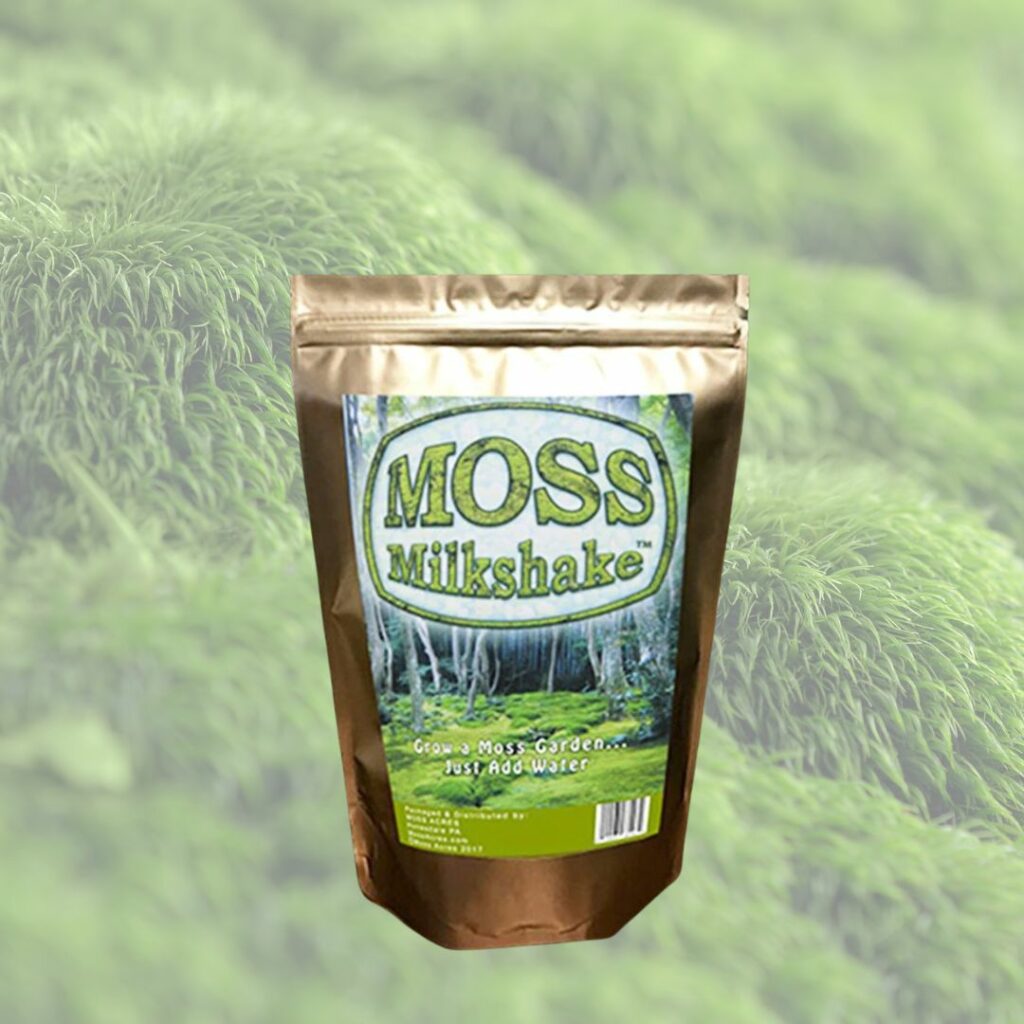
You have three routes. Laid moss reads as finished ground the day it goes down and is the only option that looks complete immediately. A moss milkshake is cheaper and slower, four to six months before you see green. Moving moss you already have is free and the slowest of the three.
The full planting guide, step by step
8. Care & Maintenance
For the first three months, water is the whole job. Mist rather than soak, let the surface dry between waterings, and keep the pressure low enough that the moss does not lift. After that a moss lawn is close to self-sufficient: no mowing, no feeding, no chemicals, and no irrigation in normal weather.
What remains is seasonal. Blow or net leaves off in autumn rather than raking them, pull the occasional weed by hand before it seats, and expect the color to shift through the year. Gentle foot traffic actually helps, because it keeps the moss in contact with the ground.
Full care and maintenance guide
9. Cost Breakdown
A moss lawn costs more than turf to install and less to own. Live moss is sold by the square foot and the price falls sharply with area: sheet moss starts at $13.95 a square foot and drops to $4.00 at 1,000. Fern moss is the most affordable species we carry, from $11.95. A moss milkshake covers ground for a fraction of that, from $7.95, in exchange for four to six months of waiting.
The ongoing cost is close to zero, which is where the money comes back. No mower, no fuel, no fertilizer, no herbicide, no irrigation system. Against a grass lawn’s roughly 150 hours a year, that is the real return.
Full cost breakdown, line by line
10. What About Sunny Parts of My Yard?
Moss thrives in shaded, moist areas , but most yards have a mix of sun and shade. For the sunny parts of your property (6+ hours of direct sun), moss won’t establish.
Instead, consider fragrant walkable alternatives like creeping thyme, which handles full sun beautifully and complements a moss lawn in shaded zones.
11. Conclusion
Moss lawns are low-maintenance and sustainable alternatives to traditional grass lawns. The initial costs are higher but the long-term savings (time and money), the aesthetics, and the environmental benefits make it a smart choice.
They need almost no maintenance, they increase biodiversity, conserve water, and provide a chemical-free environment that is safe for animals and humans. Moss yards grow well in shady areas with nutrient-poor soil and can turn muddy gardens into a lush and beautiful oasis.
This article is a summary of the ‘Moss Lawn’ series. Feel free to explore the linked articles in every section to learn more in detail about moss lawns.
Tip: We cut live moss to order by the square foot. You can buy our moss online!
Related reading: Moss Man Speaks – Lawn Bad, Moss Good · Growing a Greener World
Pending review by Olivia Milner, practitioner-scientist with a background in sustainability and education.