

Bryophytes
When Is The Best Time To Plant Moss?

The short answer: any time. Moss has no seasonal growth habit, so it transplants year round. What changes is the watering. We ship live moss all year and cut to order, with one exception: we hold shipments for a day or two when it is above 90 degrees, because moss cooks in a hot truck.
Ready to plant? Grow moss with a Moss Milkshake →
See live moss by the square foot · lead times and the live arrival guarantee
Mosses are evergreen plants. They will grow year round as long as moisture and sunlight are available at the same time. Photosynthesis is possible even below 32 degrees Fahrenheit. Mosses do not have a seasonal growth habit, instead their dormancy comes anytime they are dry. They return to active growth as soon as moisture fills their tissue. Mosses can be successfully transplanted anytime of the year. The requirements for their survival are the same no matter the zone or season.  The difference in care however will vary depending on what Mother Nature is doing. In general the differences in the time of year come down to moisture. If temperatures are mild then moisture retention is higher than it would be if you were experiencing 100 degree days when evaporative effects are increased. The more rainfall, the less irrigation you will have to provide. Other seasonal considerations come from other plants. If mosses are newly transplanted in the early fall, removal of leaf litter will be challenging if the moss wasn’t pinned or netted to the substrate. Using a blower to remove leaves from the moss may disturb unanchored or weakly attached colonies.
  Using artificial attachment like moss pins or netting is an effective way to deal with this issue. Regular blowing before leaf litter becomes deep and heavy with water will also make removal easier. Loose netting laid down over an area and then lifted once leaves have fallen is another low impact option.
 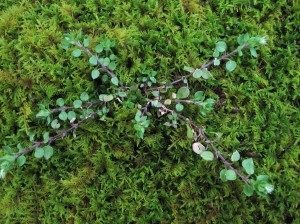 Transplanting in late winter or early spring usually means rainfall and temperatures are advantageous but annual weeds may be fighting for the same territory you have cleared for the moss. Mature and thick moss growth is naturally weed resistant but newly formed moss areas may still have exposed soils and minimal moss density. Controlling weeds are a necessary part of developing a moss garden, removal by hand is the best method and least harmful to the mosses. Pre-emergents are an effective control for annual weeds and can be used with moss gardens. The other half of weed control happens before you plant: do not improve the soil. Moss takes nothing from it, so rich ground only feeds whatever competes with your moss.
We ship year round and cut to order, with guaranteed live arrival.
See live moss by the square foot · lead times and the guarantee
Pending review by Olivia Milner, practitioner-scientist with a background in sustainability and education.