

blog
How Does Moss Grow? | The Life Cycle Of Moss Explained

This article will explain how mosses grow by explaining their complete life cycle. We will start with an overview of the moss life cycle, next, we will cover reproduction strategies, followed by spore germination, the development of gametophytes, and the biology of both sexual (including sporophyte generation) and asexual reproduction, then we will explain the impact of the life cycle of mosses on their habitat before we end this article with a chapter about successful evolutionary adaptations of moss plants.
Fragmentation is why moss can be sold at all. A piece of gametophyte grows into a whole plant, which is what a moss milkshake exploits and why sheet moss, or hypnum, spreads fastest from cut pieces. Waiting on spores works but takes years; laid moss reads as finished ground the day it goes down.
See live moss by the square foot · moss milkshakes and starters
1. Overview of the Moss Life Cycle
If you would rather start with established moss than spores, live sheet moss and the rest of the landscaping range ship cut to order by the square foot.
A quick overview of the life cycle of moss will be explained below. We will cover the gametophyte phase, the sporophyte phase, and how spores can grow into gametophytes again which completes the life cycle.
1.1 Gametophyte
The gametophyte is the first phase in the life cycle of moss plants and you can recognize it by its green, leafy structure. During this phase, the gametophyte makes female eggs and male sperm. This phase contains a single set of chromosomes (also called haploid).

1.2 Sporophyte
During the second phase, the sporophytes emerge from the fertilized egg of a moss plant which is also called a zygote. This develops into an elongated structure that stays attached to the gametophyte and depends on it for nutrients. It is green when young and does photosynthesise a little, but never enough to live independently. This phase contains two sets of chromosomes (also called diploid) and its role is to process the spores that are necessary for reproduction.

1.3 Spores
Next, the spores are produced in a structure called the sporangium by the sporophyte. The spores are haploid cells (a single set of chromosomes) that are capable of growing into new gametophyte plants if the conditions are favorable for the plants to grow. The sporangium marks the beginning of a new life cycle whenever it releases the spores so the gametophyte phase can start over again in a new plant.

2. Moss Reproduction Process
Moss plants reproduce in two ways, sexual reproduction (as explained before) and asexual reproduction.
2.1 Sexual reproduction
For sexual reproduction, gametes are produced by the gametophyte. These male gametes also referred to as sperm are made in organs that are called antheridia. The eggs, however, also called female gametes, can be found in the archegonia.
Fertilization happens when the water allows the sperm to swim from the antheridia to the archegonia. This will result in a zygote which will eventually grow into a sporophyte. Without water, for example during periods of drought, this process can not happen because the sperm needs to use water as a medium to transport itself to the egg.
2.2 Asexual reproduction
Asexual reproduction is also a cloning method that is used by gardeners to quickly grow fragments of moss into new plants. Fragmentation occurs when a piece of the gametophyte grows into new plants. Some species also produce gemmae, small clumps of cells that break away and grow into new plants. Note that the cup-shaped gemma cups people often picture belong to liverworts such as Marchantia rather than to mosses; moss gemmae form on leaves, stems or specialised shoots instead.
This type of reproduction enables moss plants to clone themselves and successfully enables them to cover large areas and spread out all over the globe.
2.3 Environmental triggers
Both of these methods have to be triggered by the environmental conditions. Moss needs the right levels of moisture, light, and temperature to kickstart sexual reproduction.
Asexual production through fragmentation can be caused by an outside force (e.g. a water stream, the wind, an animal, or a human) but the gemmae cups can only produce their clones when the environmental conditions are favorable.
3. Spore Germination in Moss
The transition from spore to protonema is the first step in the life cycle of moss and occurs as follows.
Spore dispersal in mosses is an important process for the reproduction and the colonization of new habitats. The spores are released from the sporangium and can be carried to a new place by water, the wind, or even by animals. The spores will germinate and grow into new moss plants whenever they land in the new location, and the environmental conditions are good.

Next, the spore will absorb water and the germination process has begun. Eventually, the spore will break open and it will release a small filamentous growth that is also called the protonema. This stage forms the initial link between the mature gametophyte and the spore. The protonema looks similar to algae and it absorbs nutrients and water from its surroundings for further development.
4. Gametophyte Development in Moss
The next phase is gametophyte development where the protonema grows into its most recognizable form and is explained below.
4.1 Gametophyte Growth Stages
The gametophyte stage begins whenever the spore is germinated. This creates a filamentous structure what is called the protonema as described in the previous section of this article. This juvenile stage evolves quickly into a more complex structure with leafy shoots that are (typically) green and flat to maximize photosynthesis. These shoots are small leaves around a main stem and they can reproduce either asexually or sexually.
4.2 Photosynthesis
During the gametophyte stage, the moss needs to photosynthesize to generate the energy needed for growth and reproduction. Mosses have thin leaves that are perfectly structured to capture the maximum amount of sunlight for efficient photosynthesis so the moss can produce sugars and other organic compounds that it needs for its survival.
4.3 Symbiotic Relationships
Mosses often engage in symbiotic relationships which can quicken their growth and their chances of success. Some mos plants are known to create symbiotic relationships with fungi that benefit both parties in a similar way as lichen do.
The fungi can help the moss with the absorption of water and nutrients while the moss provides the fungi with carbohydrates through photosynthesis. But the relationship doesn’t stop there. It also increases the moss’s resistance by changing the ecological role of the moss plant in its habitat.
5. Moss Sexual Reproduction
Sexual reproduction in mosses happens with the development and fertilization of female gametes (egg) by male gametes (sperm). This creates a new generation of sporophytes. Below we will explain this complex process and the structures and environmental conditions that are involved.
5.1 The Structure and Function of Male and Female Gametangia
The reproductive organs of moss gametophytes are also known as gametangia and they house the gametes. The male gametangia are called antheridia and are responsible for the production of motile sperm. The female gametangia are called archegonia and are responsible for the production of the eggs.
Some moss species are dioicous because these structures can be found on separate individuals but other moss species are monoicous and have both gametangia types on the same plant.
5.2 Process of Gamete Production and Fertilization
To fertilize the egg, the sperm that is produced by the antheridia has to reach the archegonium. This process requires water because the sperm is motile and needs to swim to the egg. This is why moss plants can not reproduce through sexual reproduction during drought but depend heavily on fragmentation during this period. Once the egg is fertilized, a zygote is created which will develop into a new sporophyte.
5.3 The Role of Environmental Conditions in Facilitating Sexual Reproduction
The environmental conditions need to be optimal for mosses to reproduce sexually. As mentioned before, moisture/water is needed so the sperm can swim to the egg. But light, temperature, and the availability of nutrients influence the success and the timing of the reproductions. Moss species are known to have specific conditions that can trigger the development of reproductive organs.
6. Sporophyte Generation in Moss
After fertilization, the moss enters the so-called ‘sporophyte phase’. This phase is characterized by the development and growth of sporophytes from fertilized eggs.
6.1 Understanding Moss Sporophytes: Growth and Development
The creation of sporophytes depends on the gametophyte for nutrition. The young sporophyte is first encapsulated and lives within the female gametangium. Next, it emerges as a slender stalk and is topped with a capsule which is known as the sporangium. This structure matures and grows until it produces spores and the next stage begins.
6.2 Function and Structure of the Moss Sporangium
Spore production occurs in the sporangium and is facilitated by meiosis. This is a capsule-like structure that is designed to maximize spore dispersal and it is equipped with the operculum (a lid) that opens when the spores mature and are ready to be released. Some moss species have a peristome which is a set of teeth-like structures to ensure that the spores are released gradually for a wider dispersal.

6.3 Moss Spore Production and Release
After the mosses are produced, as described in the previous section, they can travel to new locations by wind, water, animals, or even by humans. Once they are in a suitable location, and the environmental factors are favorable, they germinate and start a new life cycle by growing into a new moss plant.
Sexual reproduction may maybe slower than asexual reproduction (as described in the next section) but it is necessary to ensure genetic diversity within the population so moss plants can keep evolving.
7. Asexual Reproduction in Moss
Mosses can also produce asexually. They can clone themselves and grow in a new plant that is genetically the same as the original plant.
7.1 Methods of Asexual Reproduction in Mosses
One of the most common reproduction methods is through e method called ‘fragmentation’. During this method, a piece of the gametophyte (moss body) breaks off and grows into a new plant. Another method of asexual reproduction is caused by the production of ‘gemmae’. These multicellular bodies can detach from their parent plant and grow into new individuals.
7.2 Advantages and Ecological Significance of Asexual Reproduction
Moss plants have evolved to reproduce asexually for several reasons. Firstly, this method enables them to expand rapidly and cover large areas without having to depend on the complex process of sexual reproduction which heavily depends on environmental factors.
It also allows mosses to grow in areas where it could not if sexual reproduction was the only option due to unfavorable conditions for this method. So it allows mosses to thrive in a wider range of environments.
Popular mosses such as Sheet moss (often used for moss lawns) grow into large mats and carpets and are facilitated by asexual reproduction. This growth habit plays an important role in nature by stabilizing the soil and retaining water and it can serve as a habitat for microorganisms and intervertebrates.
8. Moss Lifecycle Impact on Habitat
The life cycle of moss plants can impact their habitats and contribute to stability and ecological diversity in the meantime.
8.1 Moss as Pioneer Species in New and Disturbed Habitats
Mosses are a pioneering species and can colonize bare and disturbed areas where other plant species can not survive. They can withstand harsh conditions and thrive on nutrient-poor substrates. They can cover an area and generate soil by the biomass they produce. By creating but also stabilizing soil, they create conditions that are more favorable for other plants so they can follow.
Because of how moss plants stabilize soils and are responsible for forming new soil, they play a crucial role in complex ecosystems by restoring areas to their former glory or by covering areas that haven’t been covered by plants before. This creates new habitats and increases biodiversity over time.
8.2 Contribution of Mosses to Habitat Complexity and Biodiversity
The dense mats of pleurocapous mosses (e.g Carpet moss) create shelter and food for microfauna but also for larger animals. This adds structural complexity and increases biodiversity because a wide range of species rely on moss directly and indirectly for their survival.
Moss plants also continue to recycle nutrients and they keep the moisture levels constant or they can even raise it (e.g. Sphagnum moss). But other moss species retain the moisture levels of a habit high (e.g. Sheet moss) by slowing releasing the water they have captured into their surrounding habitat.
8.3 Symbiotic Relationships in Moss Lifecycle and Their Ecological Benefits
Moss plants often engage in symbiotic relationships with bacteria and fungi which can result in better adaptions to their environment and enhances their growth and survival.
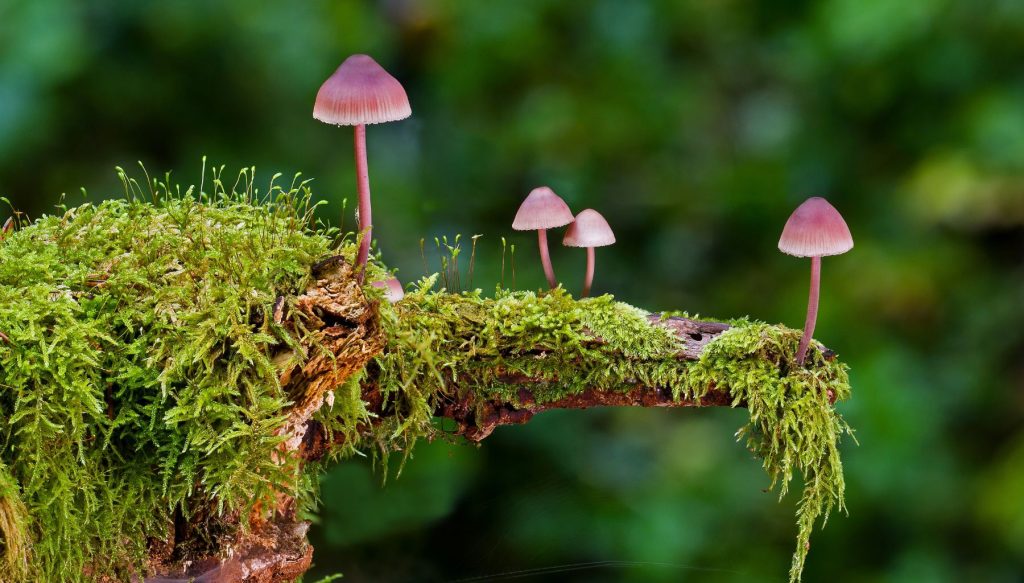
For example, the ecological benefits for mosses through these symbiotic relationships can be enhanced nutrient and water uptake through fungal associations or an improved soil fertility caused by nitrogen fixation by symbiotic bacteria.
These relationship don’t only benefit the moss plants, the bacteria or fungi, but also improve also improve and supports critical functions of the local ecosystems.
9. Adaptation Strategies
Mosses have adapted over 400 million years to survive in a wide range of diverse environments which showcases their evolutionary resilliace.
9.1 Adaptation Strategies for Survival and Growth in Diverse Environments
One of the reasons behind the evolutionary success of moss is their adaption to desiccation tolerance. This enabled moss plants to survive periods of dryness by going into a dormant state, comparable to hibernation in mammals. Mosses appear brown and ‘dead’ whenever they have entered a dormant state but when the water returns, they can rehydrate quickly and their green lush appearance reappears.
Another adaption is their lack of a root system. Their simple growth form and structure reduces the need for vascular tissue and this enables them to grow on a wider range of substrates than vascular plants.
9.2 Lifecycle Variations Among Moss Species to Suit Different Habitats
The life cycle of mosses differ per moss species because they have adapted to the environmental conditions of local habitats. Some moss species have adapted to extreme enviromments such as the arctic tundras or deserts climates where they have altered their growth forms and repdocution strategies.
These variations have enabled mosses so colonize different habitats and they can be found all over our globe as specialists to their own super niche.
Want to skip the spore stage? Laid moss reads as finished ground the day it goes down; a milkshake takes four to six months.
Pending review by Olivia Milner, practitioner-scientist with a background in sustainability and education.